A cinematographer's field guide to street fairs and open streets in Queens — ranked by suitability for capturing crowd sequences in the spirit of Midnight Cowboy: dense, human, unselfconscious, alive.
The film's iconic street sequences feature a specific set of cinematographic conditions: Joe Buck arriving in Midtown, the "I'm Walkin' Here" crossing, the nocturnal wandering. Each event is scored 1–10 against these criteria.
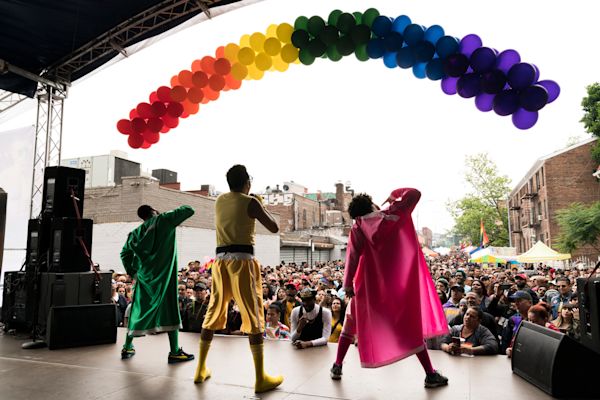
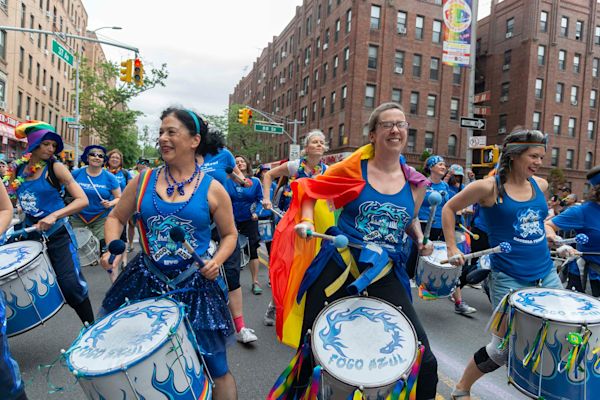
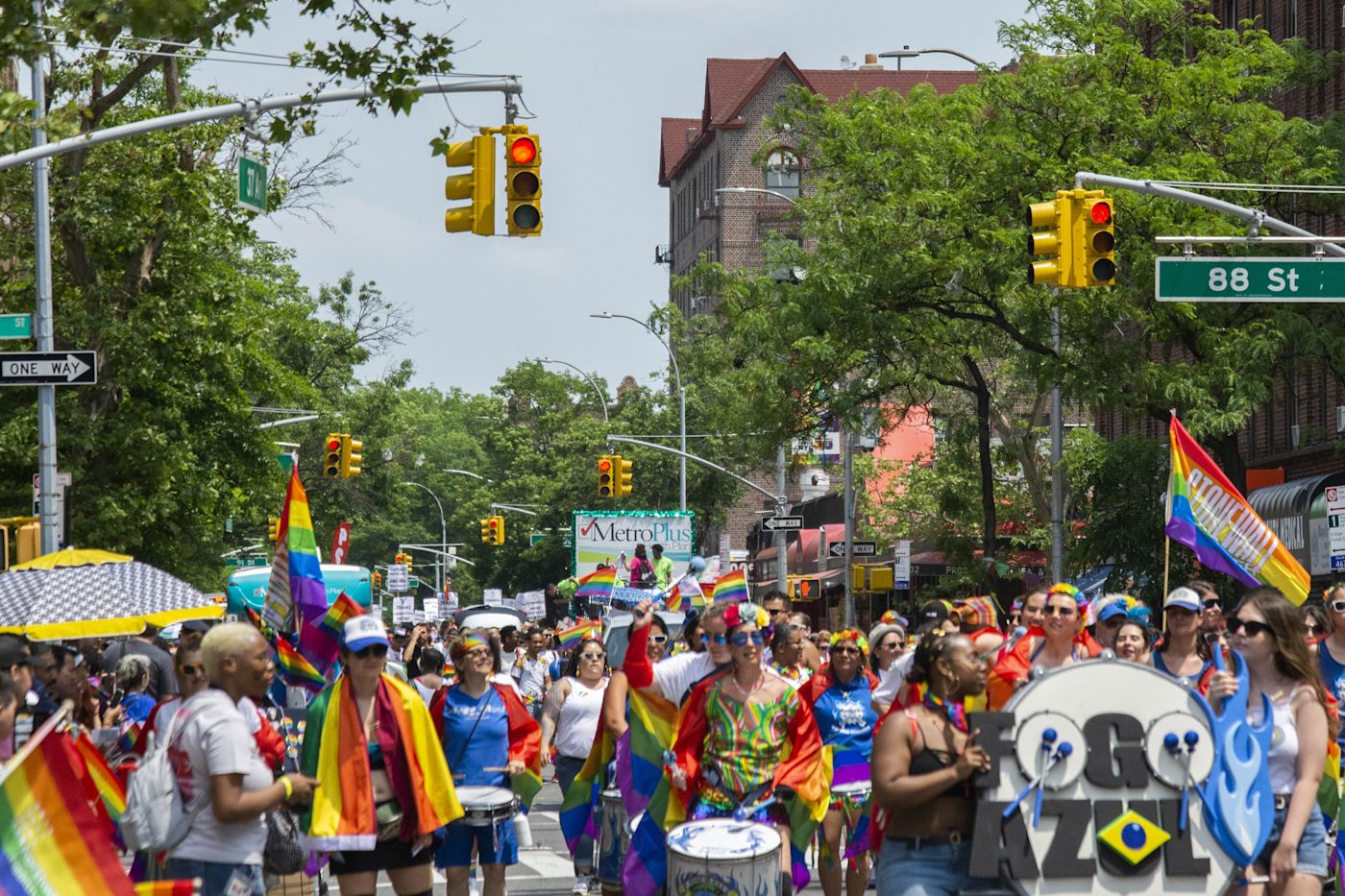
Jackson Heights is one of the most ethnically diverse neighborhoods on Earth. The Pride crowd compounds this: Colombian, Ecuadorian, Mexican, Bangladeshi, Tibetan, Indian, Filipino, and dozens of other communities — all on a single street. Marchers include LGBTQ+ advocacy groups, folkloric dance contingents, immigrant rights orgs, and city agencies. The spectator line along 37th Avenue runs three and four people deep for 14 blocks. Second-largest Pride in NYC after Manhattan — scale is real.
Joe Buck arriving in New York: one person moving through a wall of indifferent humanity. 37th Avenue's narrow corridor forces the telephoto crowd compression that makes those sequences work. Spectators, marchers, and vendors create layered foreground-to-background depth. The multicultural festival at Diversity Plaza afterward concentrates that energy into a tight vendor-crowd scrum. QPL has marched in this parade — there's direct institutional access here.
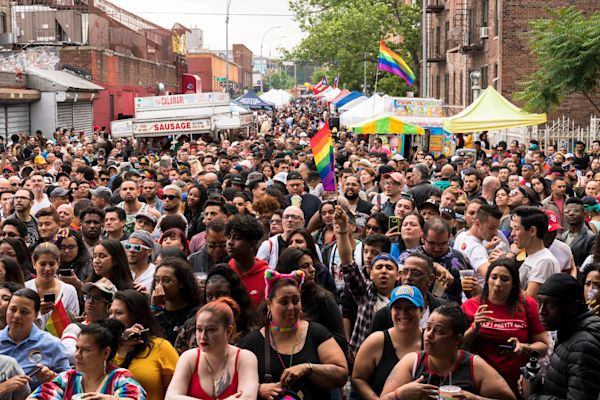
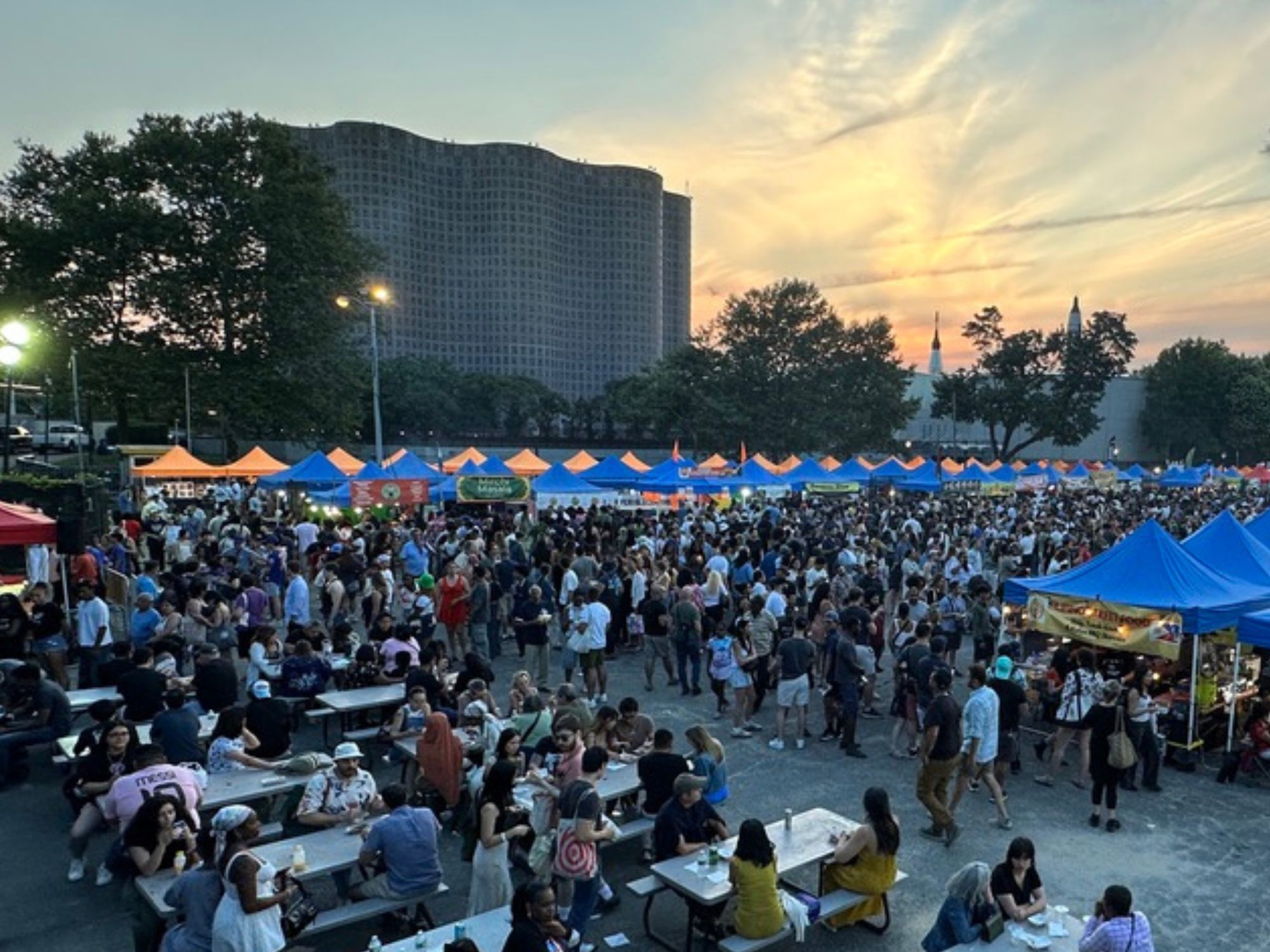
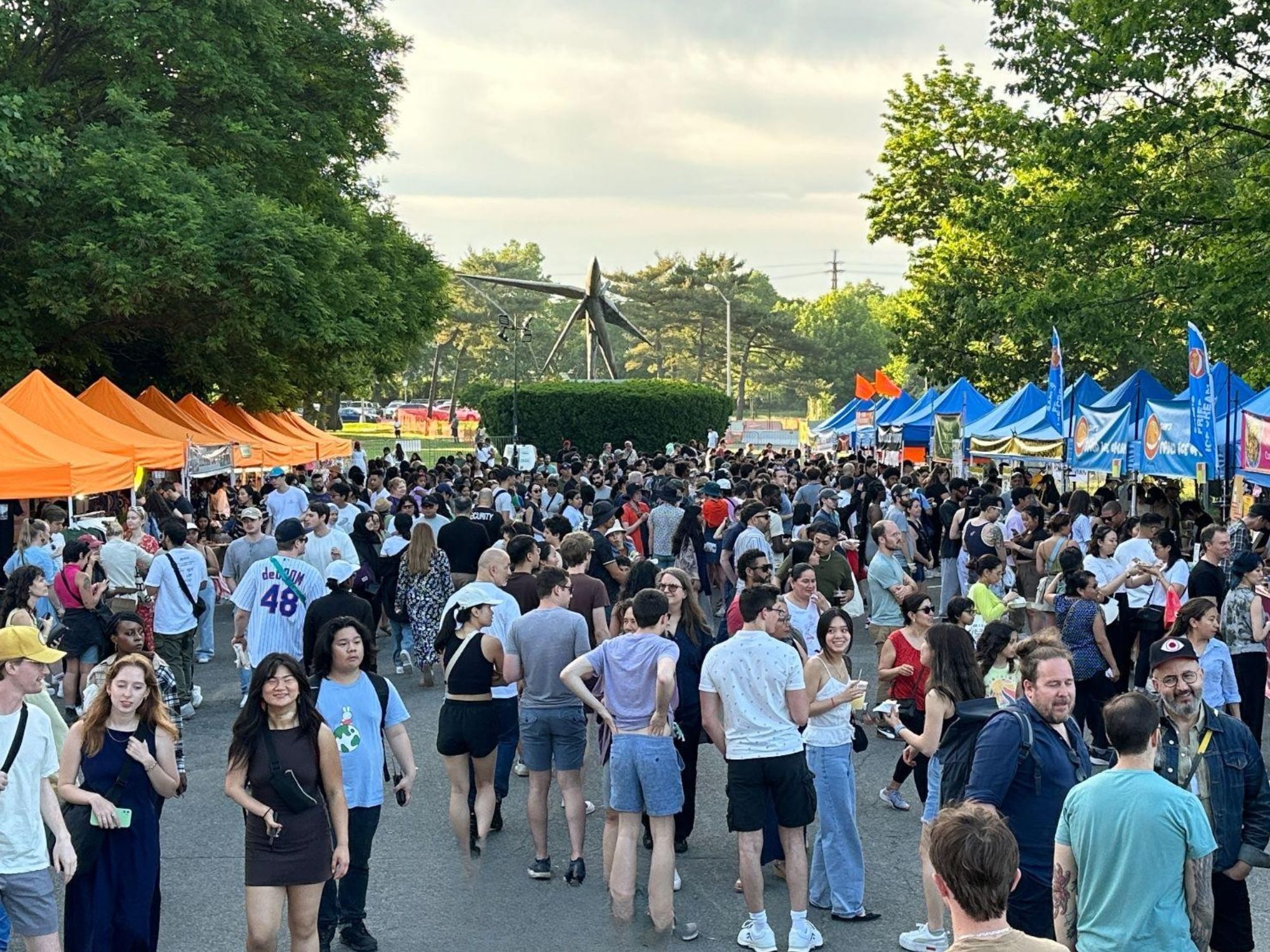
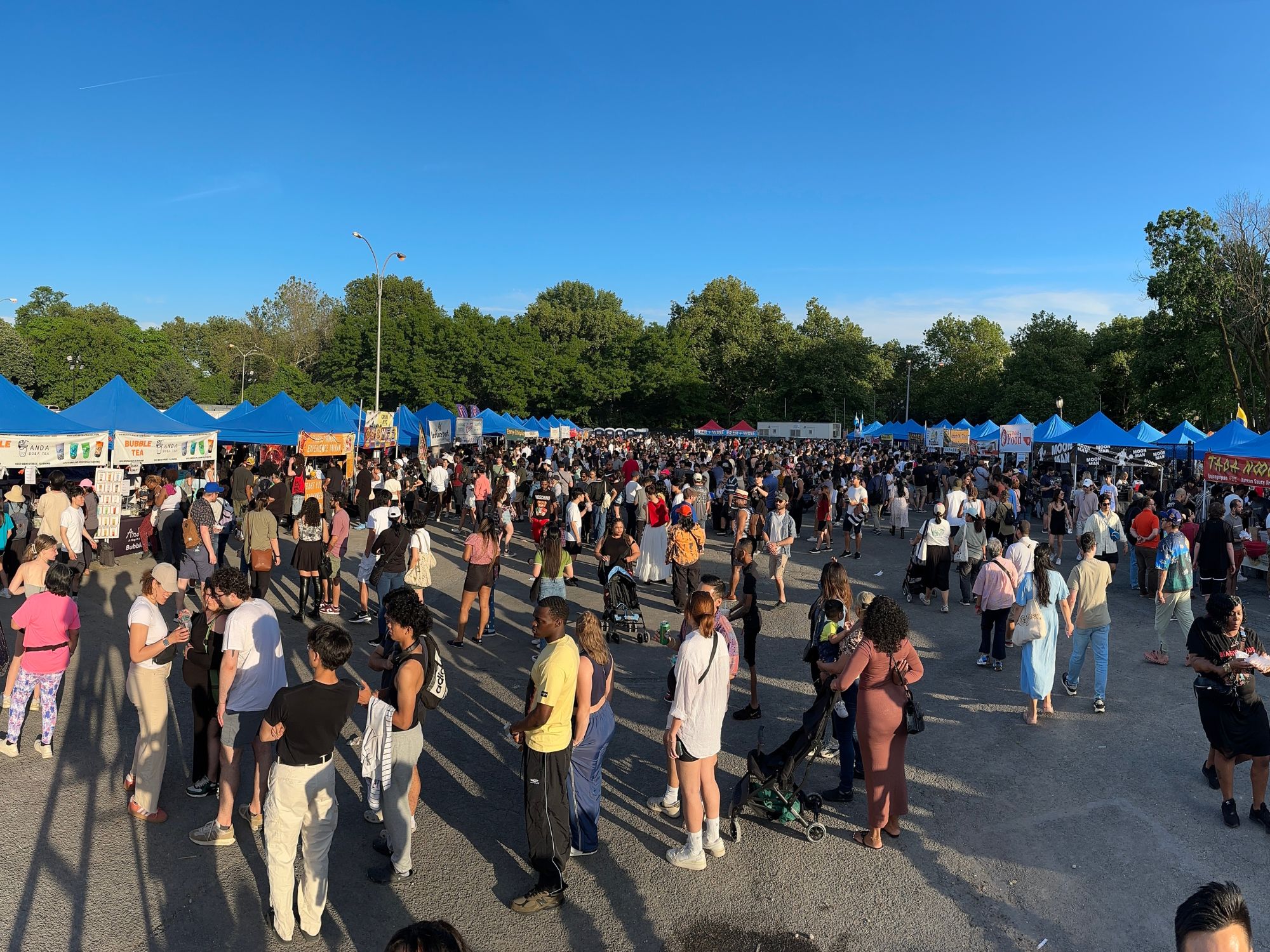
Over 100 food vendors representing 80+ countries. Visitors skew local Queens — Chinese, Korean, South Asian, Latino, Caribbean, East African — with a heavy under-35 presence. The surrounding Corona and Flushing neighborhoods are among the most immigrant-concentrated in the country. Named #9 best restaurant in NYC by the New York Times (2023). The $5–$6 price cap makes it one of the most accessible events in the city — minimal tourist overlay, real community use.
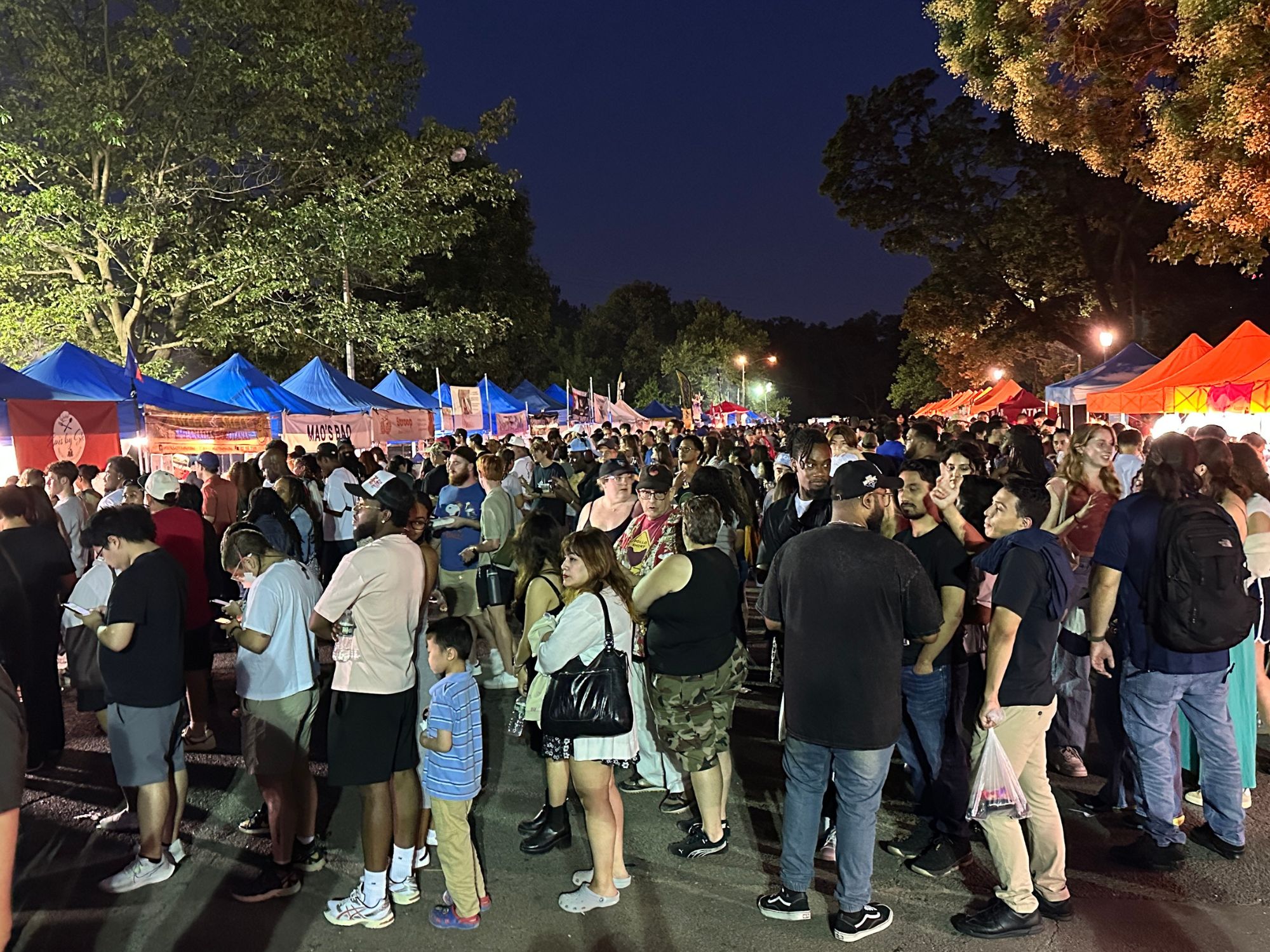
Night is an enormous advantage. Faces are lit by food stall glow — the kind of low, warm light that turns a crowd into a Weegee photograph. People queue, eat standing, stop mid-bite to look at something. The corridor design forces bodies into a dense stream. The market's variety of human faces across cultures, all caught in the particular absorption of eating, is difficult to replicate. Same location every Saturday — the most controllable option in this guide.
Astoria has over 100 ethnic groups on its commercial corridors — historically Greek, now also Bangladeshi, Yemeni, Egyptian, Colombian, West African. The Spring Festival on 31st Street draws all of them. Vendors, kids on rides, older Greek residents watching from folding chairs, young families with strollers — a genuine cross-section on a single block. The 48th-annual vintage gives it the unhurried confidence of a neighborhood institution. Organized by Astoria Restoration Association.
A classic commercial street fair — the kind MC's Times Square sequences draw from. Vendors hawking, people browsing with ambivalence, the push-and-flow of a crowd with nowhere particular to be. 31st Street is a single corridor: no dispersal problem. Kids on carnival rides add kinetic foreground texture. The full daytime window gives excellent documentary light from 11am through magic hour at 6pm. The neighborhood's cultural density is the primary draw.
Woodside is one of the more quietly remarkable neighborhoods in Queens: a dense Filipino, Irish, Bangladeshi, South Asian, and Latin American mix packed into a compact residential grid. Woodside Ave running up to Roosevelt Ave is a genuine multi-ethnic commercial corridor — not gentrifying, not tourist-facing. The festival format is a standard vendor street fair but the community that fills it is distinctly its own. One week after the Astoria Spring Festival — a natural back-to-back shoot weekend if crew is already mobilized for May.
Similar format to the Astoria Spring Festival but in a neighborhood with even less media attention and therefore a more unselfconscious crowd. Filipino, Irish, and Bangladeshi families on the same block — the cultural layering is authentic and unglamourised. The Roosevelt Ave terminus is an elevated 7-train corridor overhead, which adds industrial foreground depth to longer shots. Good daytime light, single corridor, walkable scale. The street-level intimacy is the draw here.
Western Astoria's main commercial strip, mixing long-time Greek and Mediterranean residents with newer arrivals. Broadway in Astoria is wider and more auto-oriented than 31st Street, which distributes the crowd more. Memorial Day adds a holiday leisure quality.
Moderate interest. A wider street makes tight crowd compositions harder without deliberate framing. A good warm-up day before a bigger shoot the following weekend. Verify with streetfairsny.com first — not yet confirmed for 2026 as of late April.
These are permanent or season-long programs. For MC-style crowd sequences they offer something the one-day fairs cannot: daily and weekly access to the same streets in different conditions.
The 1.3-mile corridor from 69th St to Junction Blvd is the closest thing Queens has to the Times Square that Midnight Cowboy filmed — dense immigrant street life, multilingual signage, vendors, kids, elders — but without any tourist overlay. Open 7am–8pm every day. Overwhelmingly Latino and South Asian immigrant demographics. With 167 languages spoken in the surrounding area, a single walk down this street delivers the cultural stratification the film was after. The street's strongest quality: ordinary daily life — people not performing for anyone.
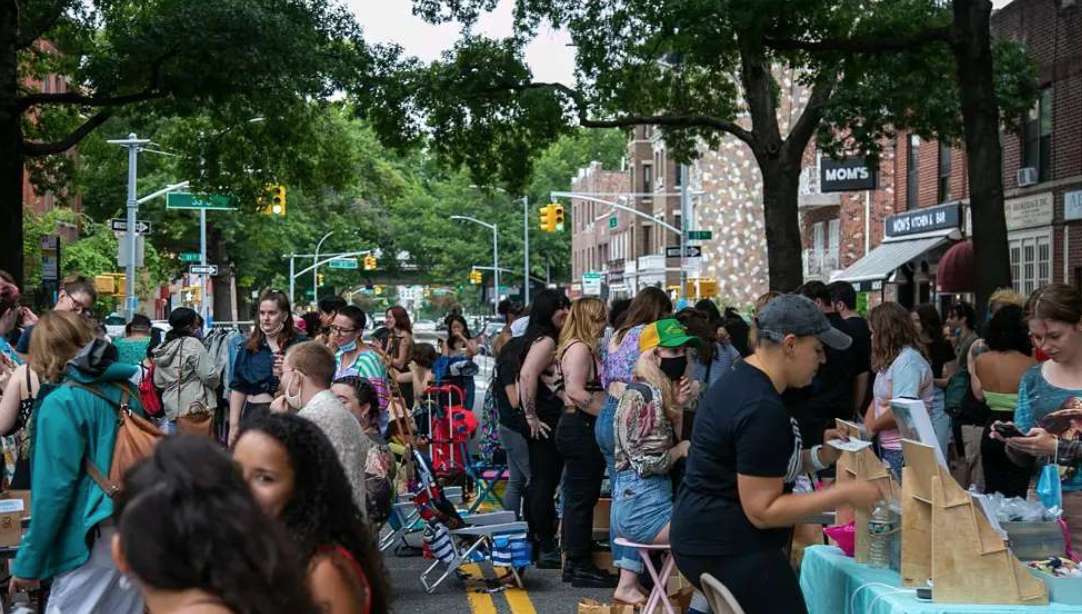
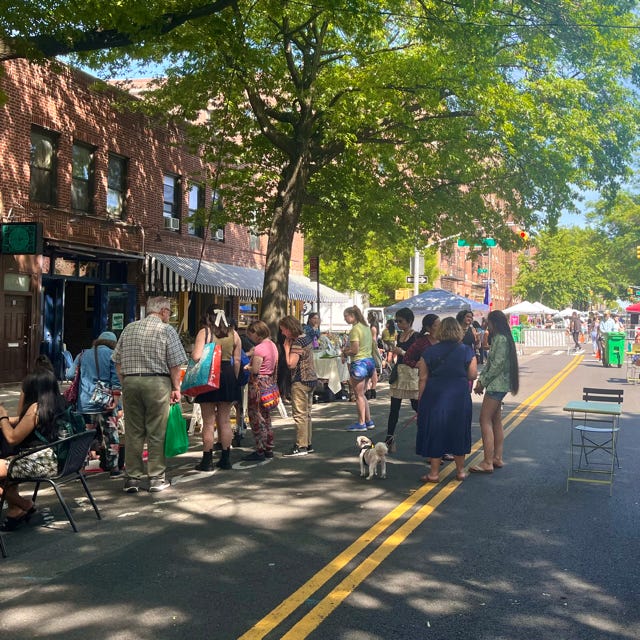
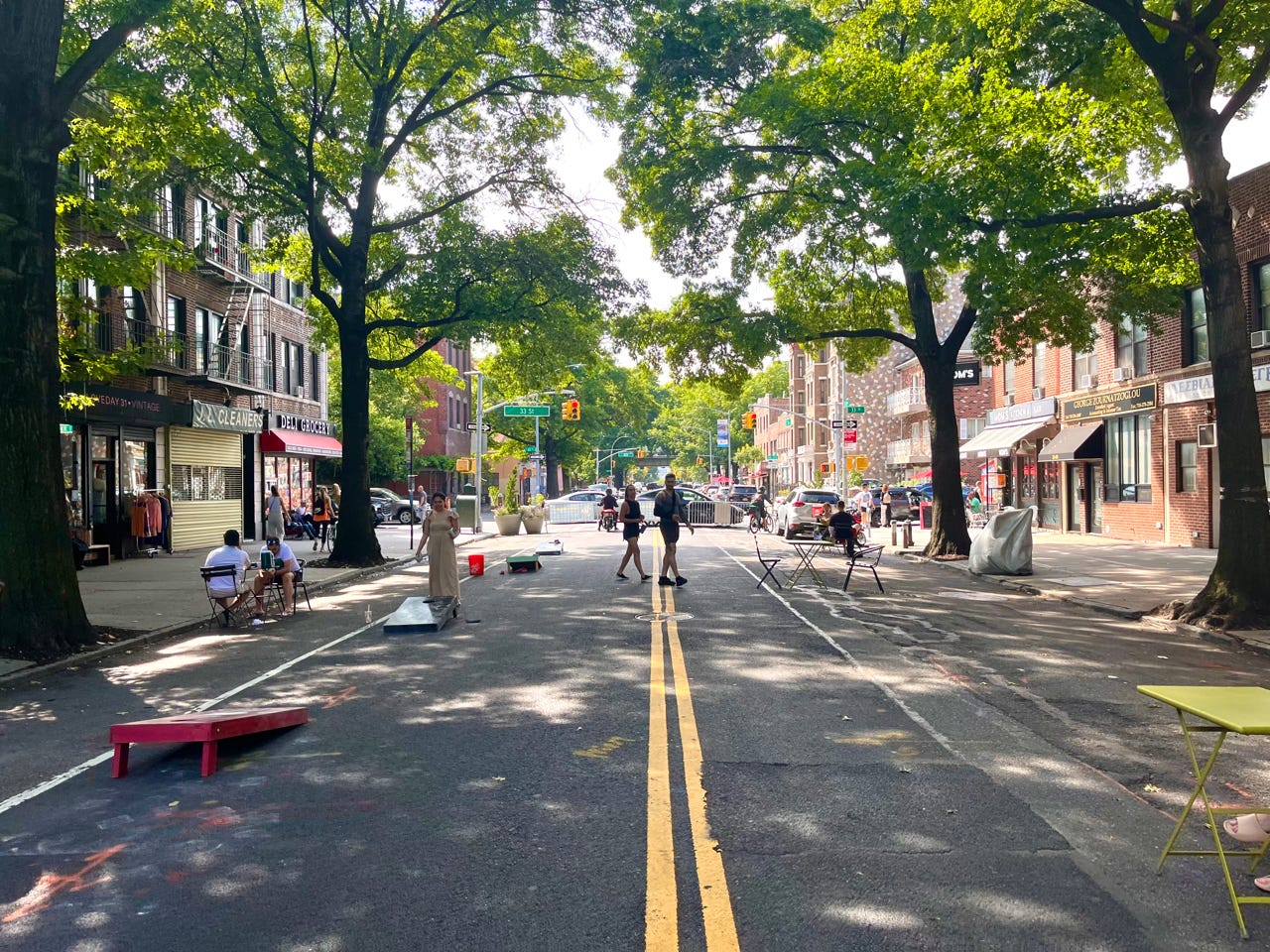
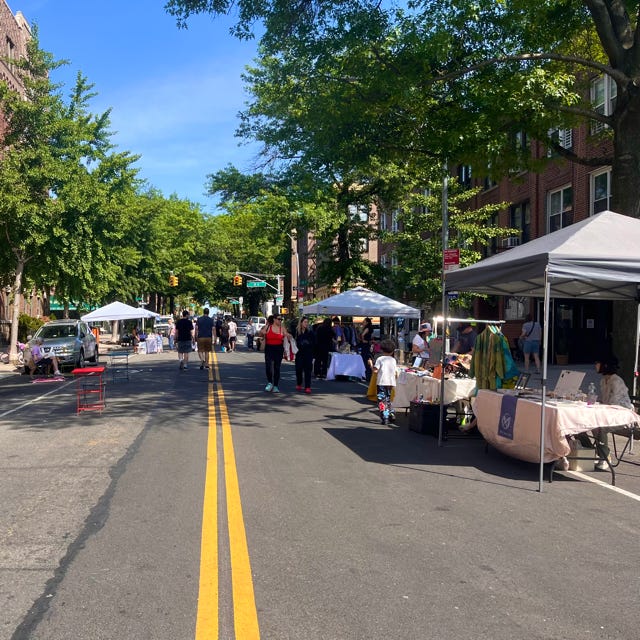
Now in its sixth year, this Saturday/Sunday program along 31st Avenue in central Astoria features maker markets, live music, and movie nights. Crowd density is lower than 34th Avenue — more promenade than scrum — but the neighborhood's cultural texture (Greek, Bangladeshi, Yemeni, Latin American) gives it real documentary value. Better for sequences requiring a leisurely street feel: people browsing stalls, sitting at café tables on the street, children on bikes.
Date depends on crescent moon sighting the evening of Sunday, May 17, 2026. The Saudi Supreme Court announces that night; most U.S. Bangladeshi mosques follow the Saudi announcement, making May 27 the near-certain date. Mosques affiliated with ISNA or using calculated calendars may observe May 28 instead. Confirm with Jamaica Muslim Center after May 17.
50,000+ Bengali Muslims in the Jamaica–Jamaica Hills corridor. Estimated 15,000–20,000 attendees across all prayer venues on Eid morning. Three generations in traditional dress converging on Hillside Ave, Jamaica Ave, and surrounding streets from before dawn. One of the largest annual religious gatherings in Queens.
Jamaica Muslim Center — 85-37 JMC Way · jamaicamuslimcenter.org · (718) 739-3182
Services: 8:00, 9:00, 10:00 AM · Capacity ~1,000/service · Community center since 1976. Primary coordinating institution for the Bangladeshi community. Best contact for crew access.
American Muslim Center — 147-29 95th Ave · amcdawa.org
Services: 6:00, 7:00, 8:00 AM · Capacity ~800/service
Rufus King Park — 153rd St & Jamaica Ave
Services: 9:30, 10:30 AM outdoor · Capacity ~1,500/service · Weather dependent. Best for open-air crowd photography.
Thomas Edison Career & Tech School — 165-65 84th Ave
Overflow venue · Capacity ~2,000
5:30–6:30 AM: Pre-dawn family preparations. Quieter, intimate. Traditional dress being put on. Households moving toward mosques.
7:00–11:00 AM: Primary window. Community convergence across all venues. Hillside Ave between 157th and 165th St fills with foot traffic in kurtas, shalwar kameez, and formal dress. Three-generation families. Interfaith outreach presence from local officials and QPL staff.
Post-prayer (11 AM onward): Food preparation and sharing. Informal gatherings. The street returns to residential rhythms but with elevated foot traffic and celebration energy.
No confirmed bazaar: Most Eid bazaar listings found in research were for Eid al-Fitr (March 2026). Informal food and merchandise vendors will be present near prayer venues but no dedicated Eid al-Adha bazaar has been confirmed for Jamaica, Queens in 2026. Verify with JMC closer to date.
QPL Jamaica Branch (160-56 Jamaica Ave) is 5 blocks south of the Hillside Ave corridor and directly serves this community through Bengali-language resources and cultural programming. Institutional access for crew coordination should be possible via library contacts. This is the same community Hillside Ave (Guide II, Score 97) was scouted for — Eid morning is when that corridor is at peak cultural density.
Filming a religious observance requires advance community coordination — do not arrive with crew without prior outreach. Contact Jamaica Muslim Center and QPL Jamaica Branch well before May 27. Cultural sensitivity is essential: prayer times are not filming opportunities; the street life before and after is. A community liaison — ideally Bengali-speaking — is strongly recommended. QPL's existing relationships with this community are the right entry point.
Beyond the Night Market, two events this season put crowds in the park — and within range of the Unisphere.
A free SummerStage show at Flushing Meadows presenting DJ Rekha's iconic Basement Bhangra party, featuring British Punjabi and hip-hop star Jaz Dhami and classically-trained vocalist Mitika Kanwar. South Asian community event — free admission — drawing Punjabi, Bengali, and South Asian diaspora from across the borough. The demographics are the QPL community. The park location means you can position for both the concert crowd and the Unisphere in the same shoot. This is the most thematically aligned Flushing Meadows event in the season — immigrant community, free, outdoors, and deeply cultural.
Gov Ball's main entrance runs directly between the Unisphere and Astronaut Court, meaning 40,000+ people flow past the Unisphere per day — and the promenade is public park space, no ticket required. That's the practical value. The demographic caveat: Gov Ball draws heavily from outside Queens, with an out-of-borough and out-of-town audience that doesn't reflect the immigrant community QPL is documenting. Tickets start at $179/day, which filters out the surrounding Corona and Jackson Heights neighborhoods almost entirely. Good for a Unisphere-with-masses background plate. Wrong crowd for the film's subject matter.
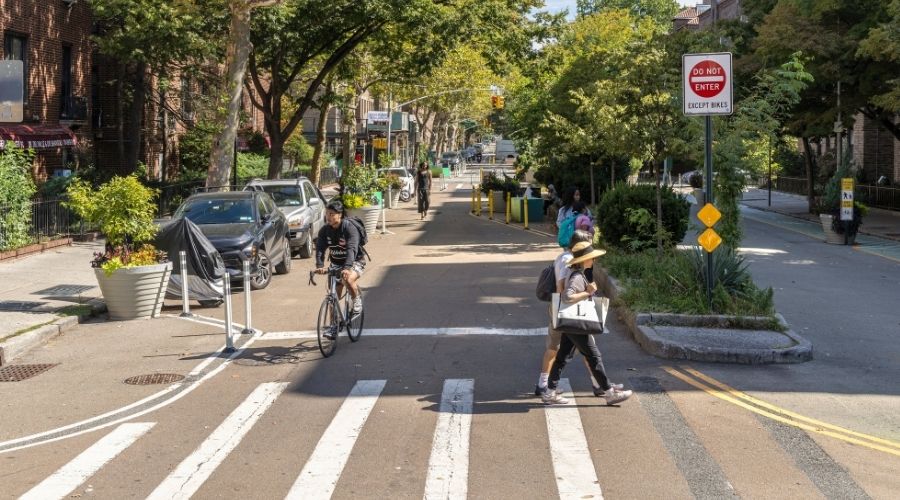
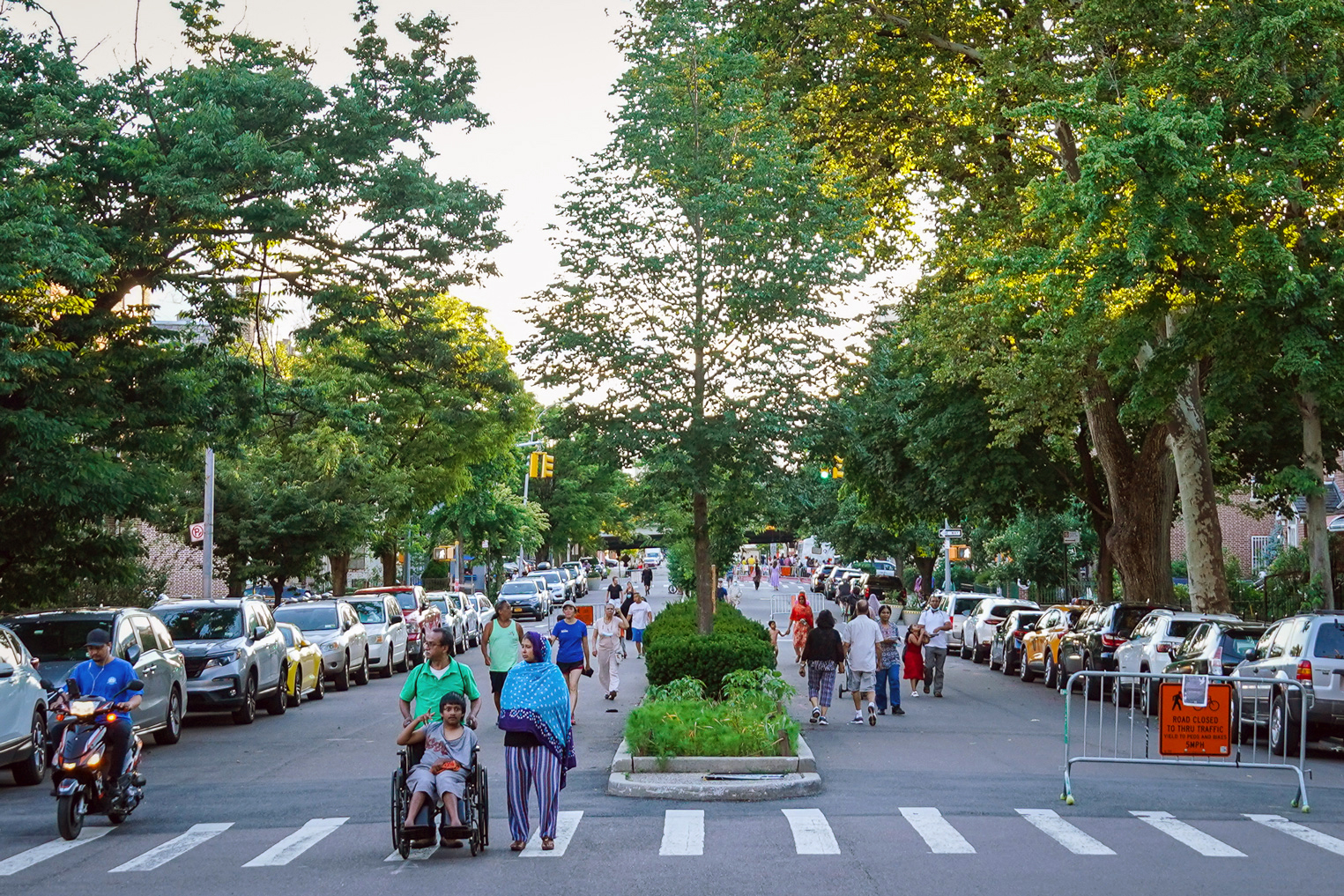
The 34th Avenue Open Streets corridor passes directly through the library's core service territory — it's the same Jackson Heights and Corona immigrant community the film is documenting. Shooting there any weekday morning or Saturday afternoon gives you both the Midnight Cowboy crowd-flow shots and the direct human connection the film needs. If you can only commit to one location between now and July, it's this one. Any day. Any time.
For the biggest single shooting day, June 7 (Queens Pride) is the standout — 60K+ people on a narrow street. The parade route on 37th Ave is physically narrow enough that a long lens from a fixed position will compress 3–4 layers of crowd depth. QPL has marched in this parade before, which gives you institutional access worth exploring. Plan crew coordination early.
Queens Night Market is the controllable weekly option: same location every Saturday from May 9, predictable crowd of 20K, and the night light is cinematically extraordinary. Free admission starting May 9 — sneak preview tickets are $5 on May 2.